
Mönch and Jungfrau
Mönch and Jungfrau are two of the best-known peaks in the Bernese Alps in Switzerland, often mentioned together with the third — the Eiger. Together they form the famous Eiger–Mönch–Jungfrau trio, one of the most iconic mountain panoramas in the Alps.
Mönch and Jungfrau
two days, two fourthousanders
1500 € | 1 client
900 €/person | 2 clients
Price includes guiding. Additional costs (for both the guest and the guide) – accommodation in the valley, accommodation in the huts, and the gondola+train pass – are not included in the price and are charged separately. Estamated costs approximately are 700 € in case of one client and 520 €/client in case of two clients.
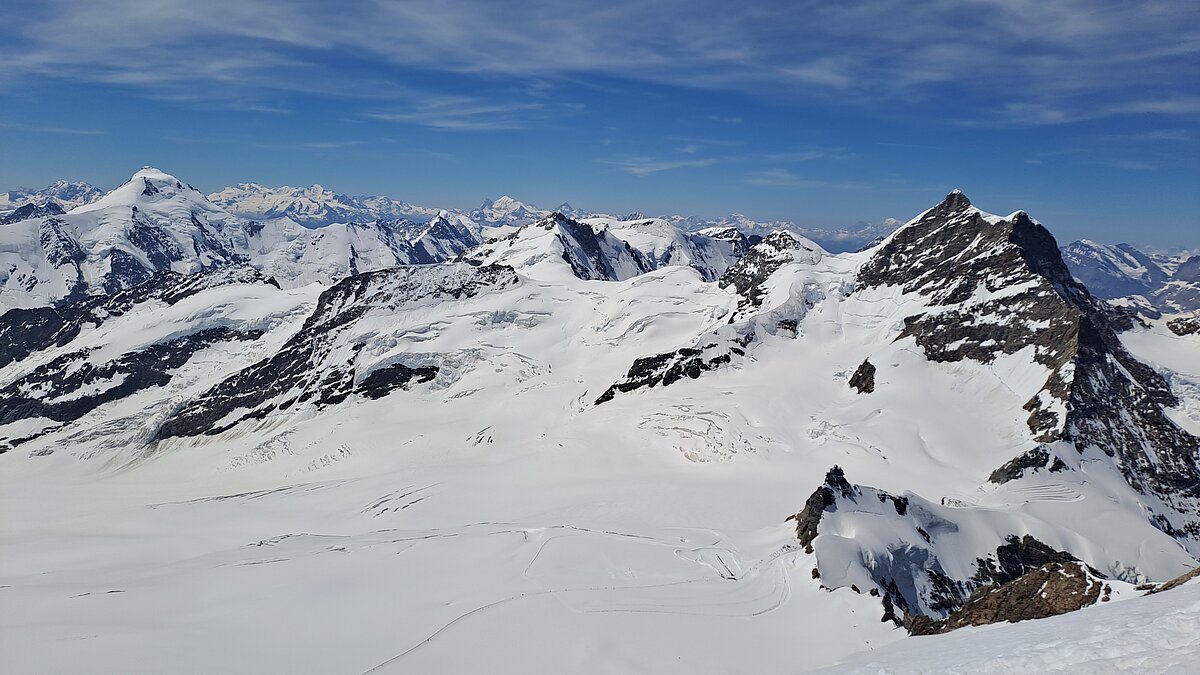
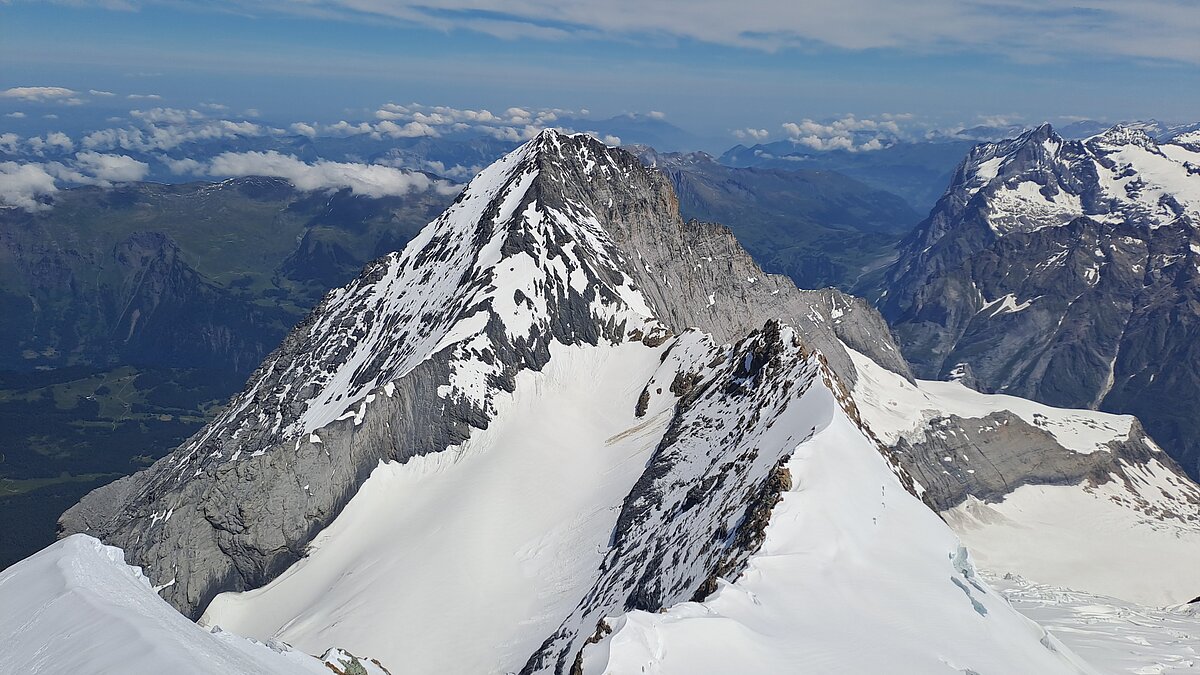
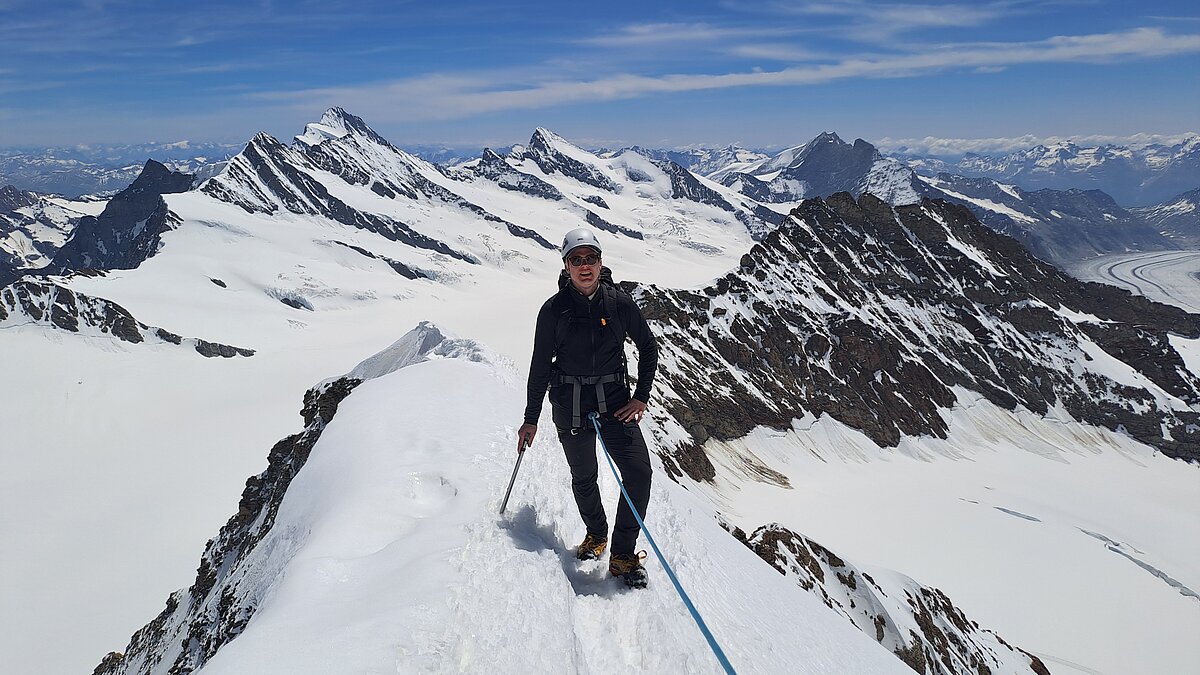
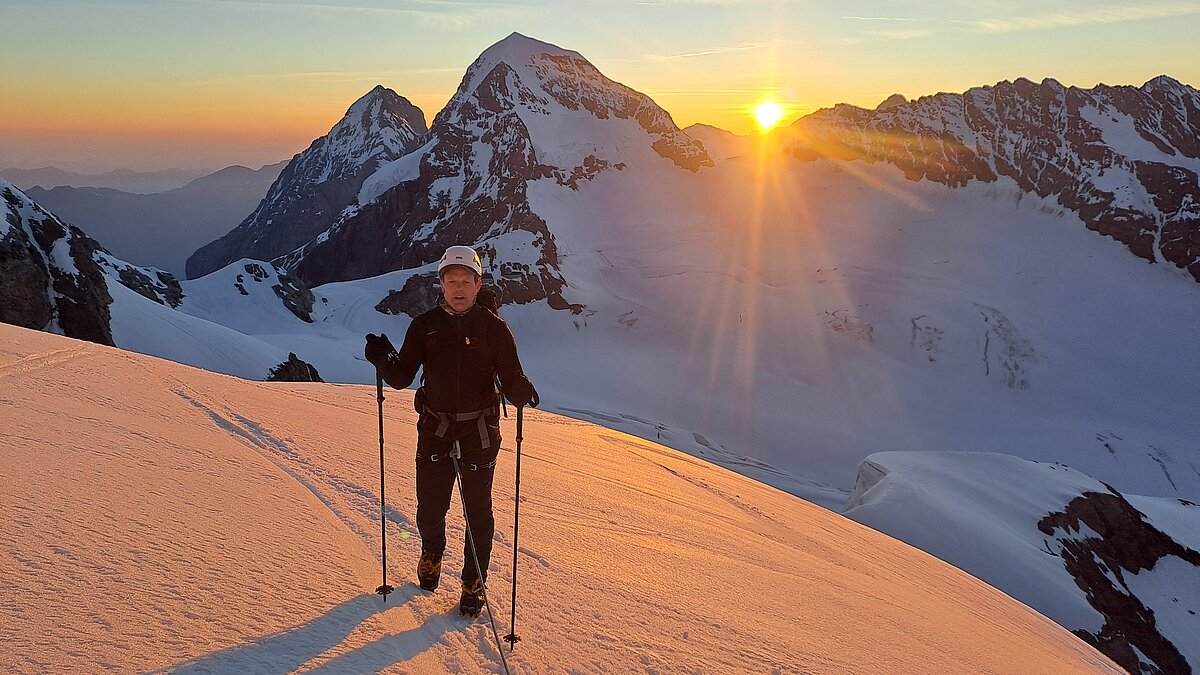
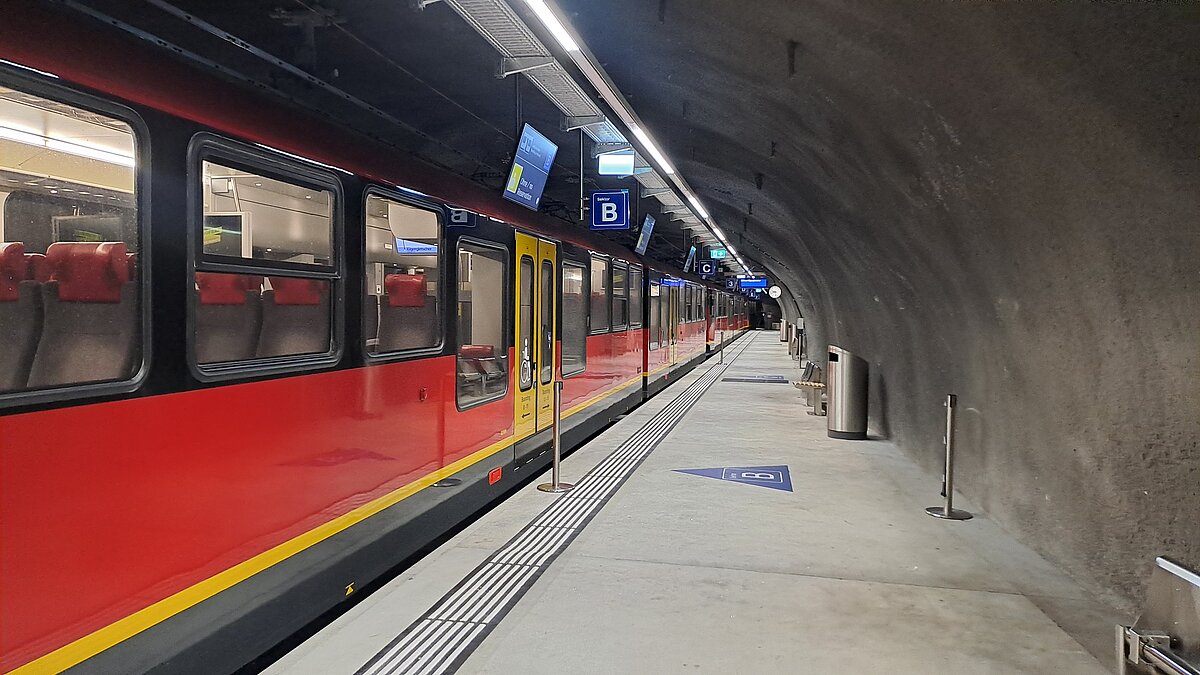
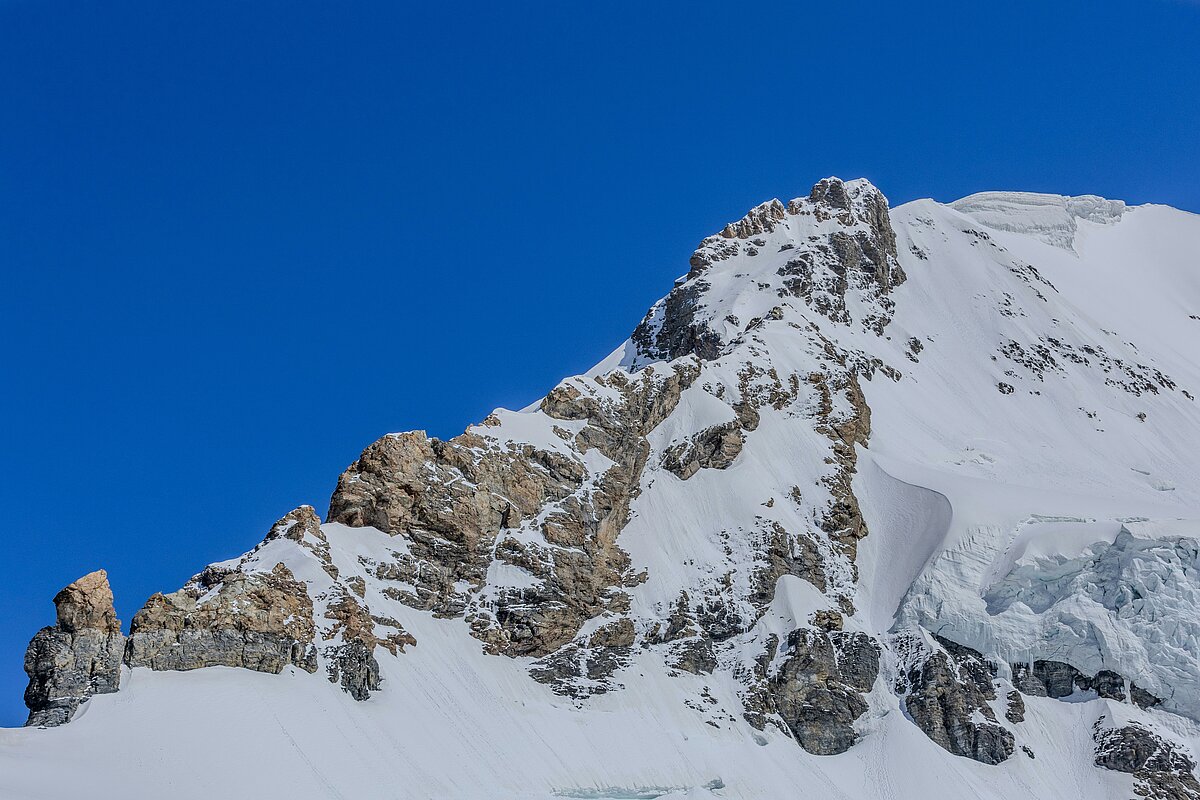
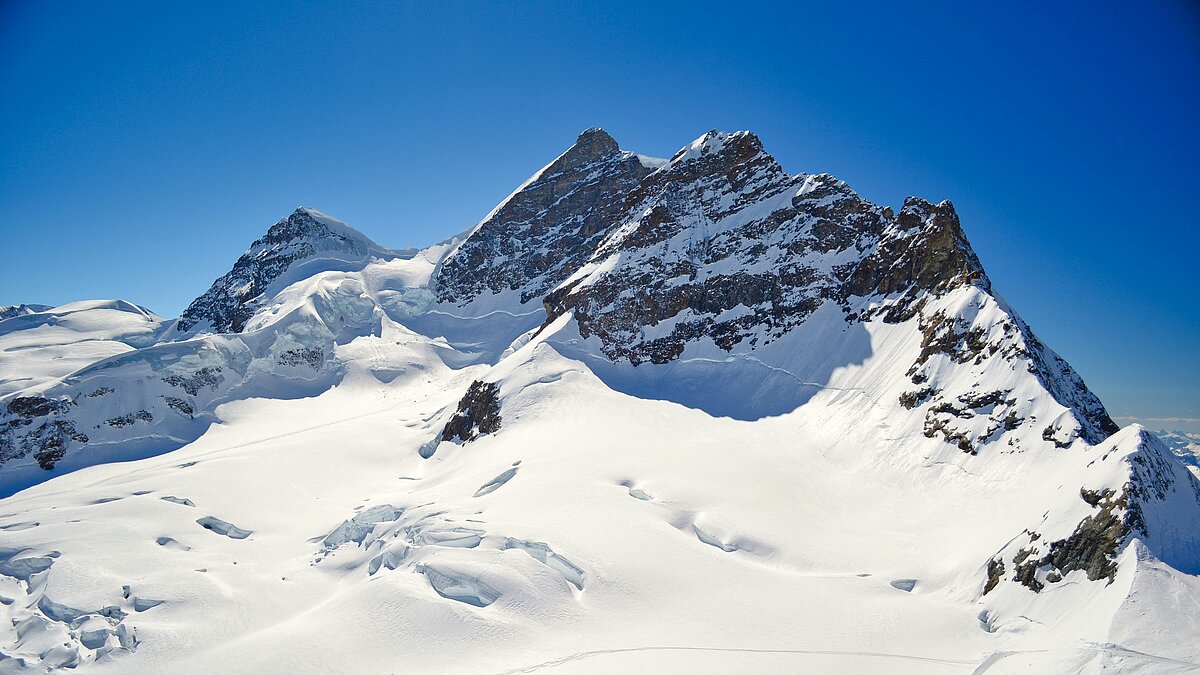
We begin the tour similarly to the ascent of the Eiger — at the lower station of the Eiger Express gondola in Grindelwald. We transfer to the cogwheel train on the upper gondola station and end up at the highest railway station in Europe — Jungfraujoch (3454 m). From here, both peaks are clearly visible: Mönch (4110 m) to the East and Jungfrau (4158 m) to the West. We head east, and after about half an hour of walking across the glacier, we reach the start of the Normal Route on the Mönch — the Southeast Ridge. The ridge is not technically difficult, but the upper section is very exposed and requires complete focus with every step. We descend along the same route, rappelling down the steepest parts. The goal for the day is the hut located at the junction of two glaciers — the Mönchsjochhütte (3650 m).
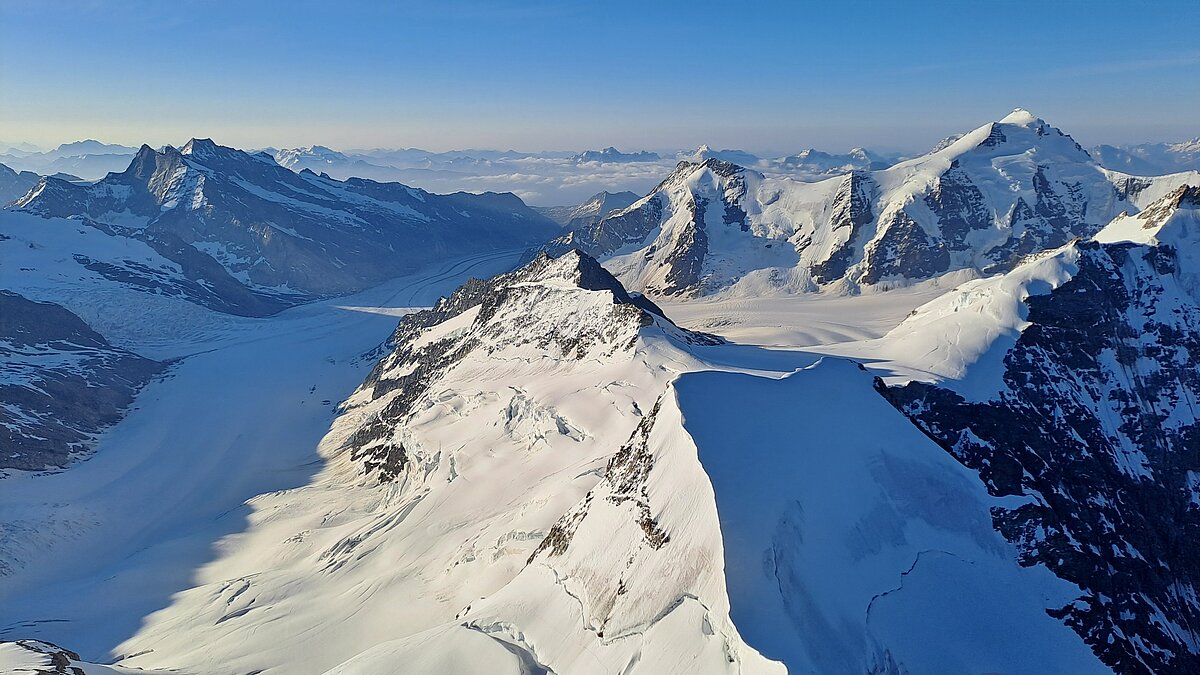
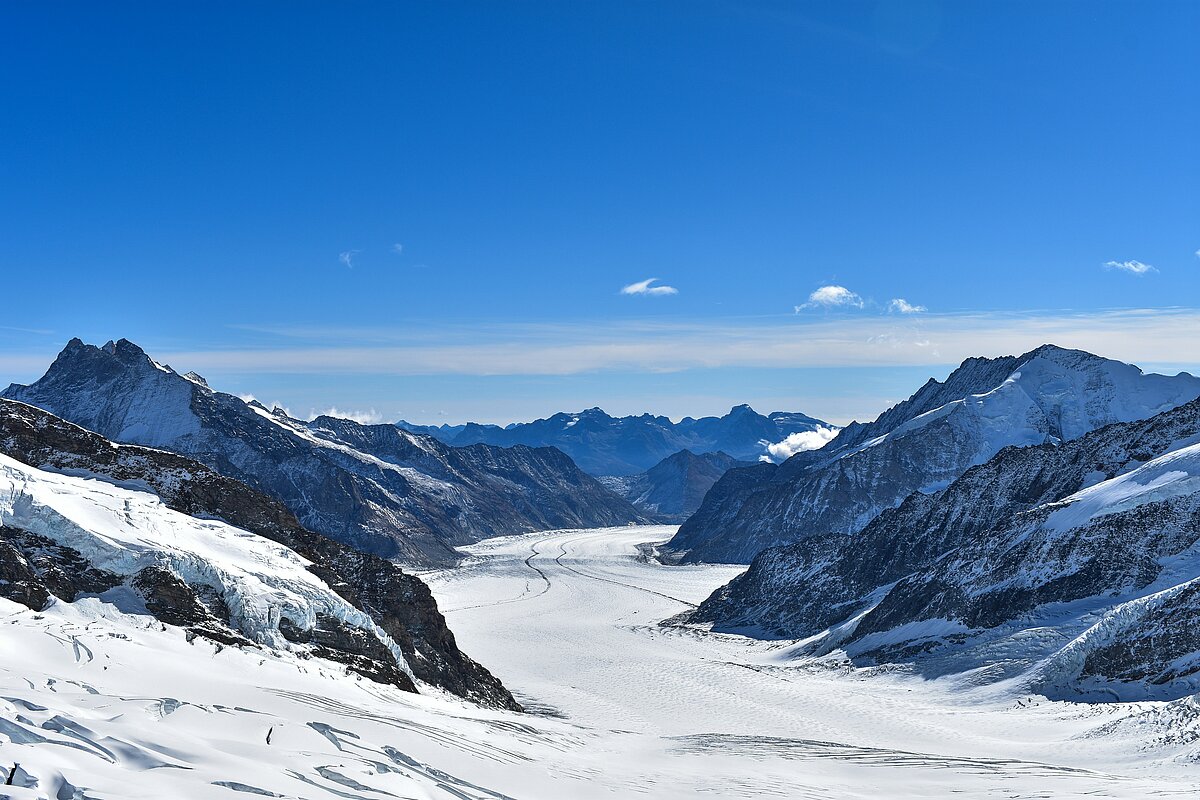
The next day, we set out very early, retracing our steps at first and then continuing west to the point where the long Jungfrau snowfield meets the cravassed glacier. We continue up steep snow to the Rottalsaddle (3885 m), from which only steep slopes and the sharp Northwest Ridge separate us from the summit. Standing at the westernmost point of the crown above Grindelwald, we get a sweeping panorama of the Eiger, Mönch, Finsteraarhorn, Fiescherhorn, and many other smaller peaks surrounding the Aletsch — the longest glacier in Europe. Descent follows the line of ascent back to the railway station.
It is highly recommended that clients are properly acclimatized before the tour. Symptoms of altitude sickness (headache, dizziness, nausea, ...) can be very unpleasant and often ruin the experience. Acclimatization can also be done together with a guide.
| Grade | Altitude difference | Duration | Best season |
| III/PD | 800 m | 2 days | June - October |

... this is not the only interesting mountain in the Alps.
There are a lot of other interesing mountains and climbing routes in the Alps. I listed some of them here and I invite you to contact me with your ideas.